
The Only DIY Key Holder That Won’t Collect Dust
You don’t need another “Pinterest-perfect” project that looks great but doesn’t fit your life. What you need is a key holder that solves a real problem: knowing exactly where your keys are when you walk in the door.
This guide keeps things simple. No fancy tools. No overthinking. Just a practical key holder you’ll actually use every day.
Why Most Key Holders Don’t Work
Let’s be honest. Most key holders fail for one reason: they don’t match how you actually move through your home.
Common mistakes:
- Placing it too far from the door
- Making it too small or hard to use
- Turning it into decoration instead of something functional
If it’s not easy, you won’t use it. It’s that simple.
Step 1: Pick the Right Spot First
Before you build anything, decide where it goes.
The best place is:
- Right by the door you use most
- At eye level or slightly below
- Somewhere you naturally pass when entering
If you have to think about using it, it’s already in the wrong spot.
Step 2: Choose a Simple Design
Forget complicated builds. The goal is convenience.
Here are a few solid options:
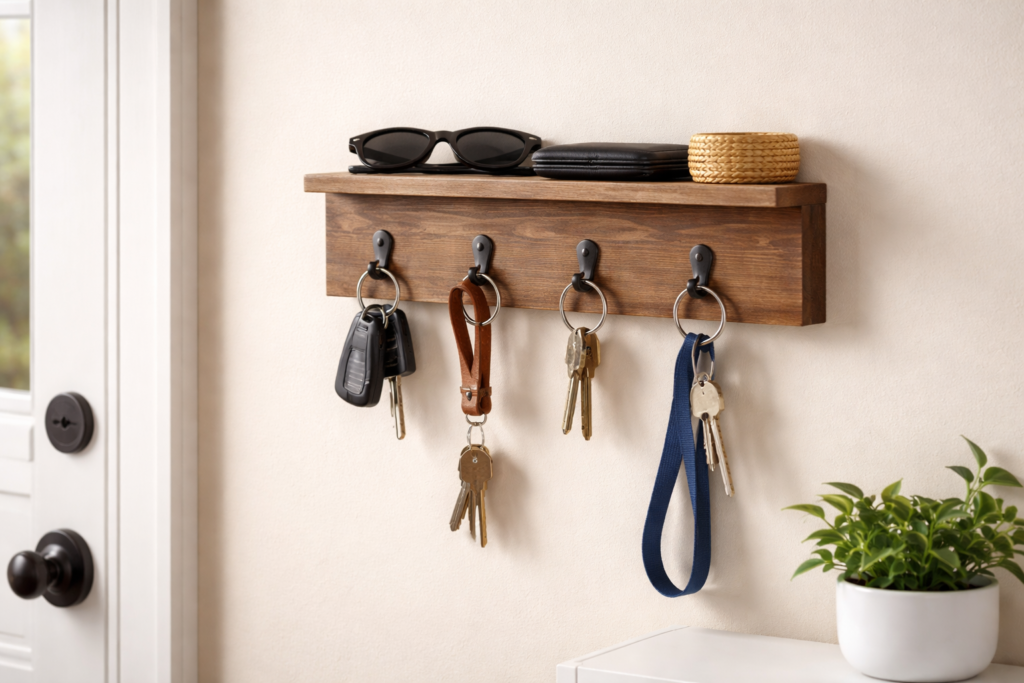
- A wooden board with hooks
- A small shelf with pegs underneath
- A magnetic strip (great for minimal setups)
If you carry more than just keys, go with a small shelf so you can drop your wallet or sunglasses too.
Step 3: Gather Basic Materials
You don’t need much:
- A piece of wood (about 8–16 inches wide)
- 3–6 hooks or pegs
- Screws
- Wall anchors (if needed)
- Drill or screwdriver
Optional:
- Sandpaper
- Paint or stain
That’s it. Keep it simple so you actually finish the project.
Step 4: Build It in Under an Hour
Here’s the straightforward process:
- Prep the wood
Sand it down so it’s smooth. Paint or stain if you want, but this is optional. - Attach the hooks
Space them evenly. Leave enough room so keys don’t overlap. - Mount it on the wall
Use screws and anchors if needed. Make sure it’s secure since you’ll use it daily.
Done. No complicated steps.
Step 5: Make It Easy to Use (This Matters Most)
This is where most people get it wrong.
To make sure you actually use it:
- Keep hooks slightly spaced out
- Don’t overcrowd it
- Leave one extra hook for guests or new keys
If it ever feels annoying to use, you’ll stop using it.
Step 6: Build the Habit
Even the best setup needs a small habit shift.
Try this:
- The moment you walk in, keys go on the hook
- No exceptions, even if you’re tired
It takes a few days, then it becomes automatic.
Small Upgrades That Make a Big Difference
If you want to level it up later:
- Add a small tray for loose items
- Label hooks if multiple people live with you
- Add a tiny light above it so you can see it at night
These aren’t required, but they make it even more useful.
Final Thoughts
A good key holder isn’t about style. It’s about making your life easier.
Keep it simple. Put it in the right place. Make it easy to use.
If you do those three things, you won’t just build a key holder. You’ll build a habit that saves you time every single day.
And no more last-minute key searches on your way out the door.